What are the microorganisms in activated sludge? Protozoa and filamentous bacteria [Basic Knowledge]
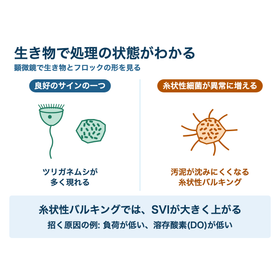
When viewed under a microscope, something is moving in the sludge?! This explains the types of microorganisms in activated sludge and the organisms that indicate the treatment conditions.
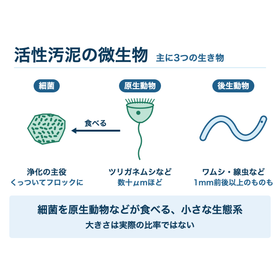
Activated sludge is not just mud. It is a collection primarily composed of various microorganisms that take in and decompose organic matter in wastewater. It mainly consists of the following organisms: 1. Bacteria 2. Protozoa 3. Metazoans (multicellular animals such as rotifers and nematodes) It forms a small ecosystem where bacteria are consumed by protozoa and others. ■ The main players are bacteria Among them, the main players in purification are bacteria. Aggregative bacteria release a viscous substance (EPS) outside their cells to stick together, forming small clumps called "flocs." A well-known bacterium for this function is Zoogloea. When left undisturbed, flocs settle down, leaving clear water on top. ■ Protozoa eat bacteria! Vorticella, a type of ciliate, has fine hairs (cilia) arranged in a ring around its mouth and consumes bacteria from the water. Its size is about several tens of micrometers. Some amoebas can reach several hundred micrometers. Organisms like protozoa and rotifers that feed on suspended bacteria in the water also play a role in clarifying treated water. Please feel free to consult us first.
- Company:トリイ
- Price:Other